
It was a tragedy going to such a horrible highschool, you see. I never got a proper education nor did I meet any like-minded individuals because my school was packed with the bottom feeders of society.

Table of Contents
- My Donkey Doo Doo School
- The Fraser Institute
- UBC vs Langara
- Chinese Parents and WeChat Moms: Who Believes This BS(?)
- In Defence of School Rankings
My Donkey Doo Doo School
I went to a BAD school: Hugh Boyd Secondary School, (ex) home of the Trojans. Out of the 10 secondary schools in Richmond, BC, Boyd was ranked dead last at number 10, and out of the 252 secondary schools in the entire province, we’re 225 and scored a 4.1 out of 10. Yikes! In fact, even the colour of my school attests to this.
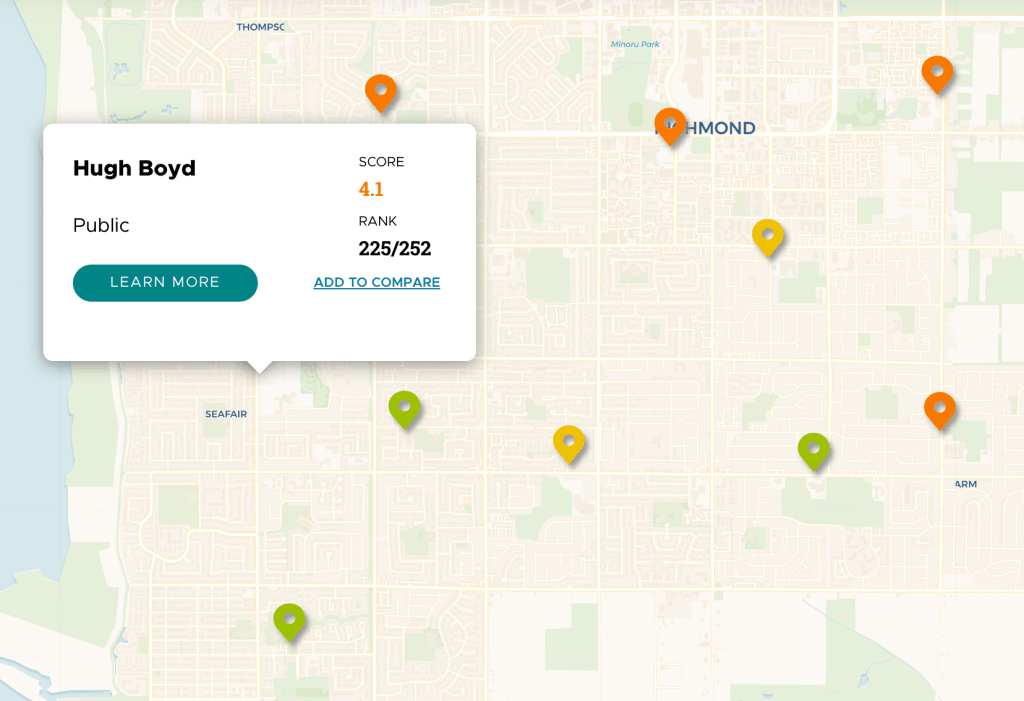
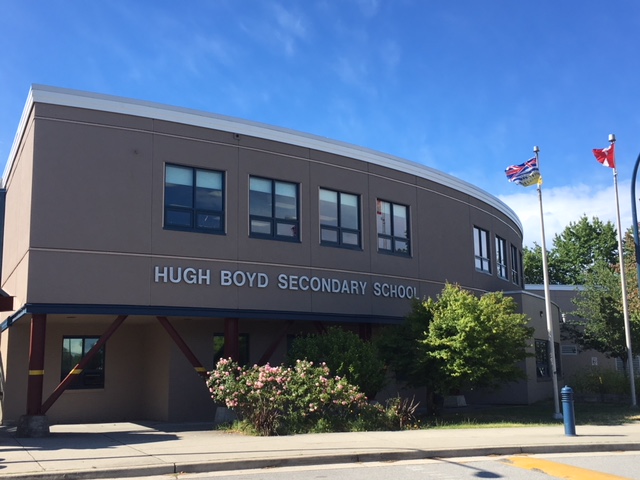
On the BC school rankings map, each school is given a colour signalling how good or bad they are. Boyd? Why, you know we’re bad because we’re an orange school. Oh the humanity! The colours simply never lie!

It was a tragedy going to such a horrible institution, you see. I never got a proper education nor did I meet any like-minded individuals because my school was packed with the bottom feeders of society. It was so bad, in fact, that when it came time for university applications, only basically every single one of my close friends from highschool made it to UBC, the 2nd “best” university in Canada that’s consistently ranked top 50 globally…
Hmm. How peculiar… This doesn’t seem right? Supposedly, if Boyd is ranked as one of the worst schools in BC, shouldn’t basically none of our students make it to UBC? And even as UBC students, the Boyd kids I knew are all passing their courses with flying colours. In fact, now that I think about it, most of the Boyd teachers were great, and I actually had a very fun and educational four years there. But this simply can’t be! We’re an orange school, afterall! So, if an orange school can achieve all this, what do the rankings even mean then?!
Well, dear reader, allow me to put my tin foil hat on, and we’ll dive right into it!

The Fraser Institute

So, the most popular (and basically only) BC school ranking out there is the Fraser Institute’s, a think tank located in Vancouver, premised on helping parents “make more informed decisions” about their children’s education.

Now, according to Cambridge Dictionary, a think tank is:

Consequently, parents should definitely be picking schools for their kids solely based on the Fraser Institute because it is an organization filled with “experts” who are—as far as parents are concerned—“very smart people who know so much more than me.“
But something isn’t quite right, is it? The definition above says a think tank is “usually by a government,” yet when I visit the Fraser Institute website, I can’t help but see the big fat “.org” at the end of their URL:

It’s okay though. Anyone with common sense knows that the government is evil and wants to steal our freedom by limiting our free speech (plus, they’re trying to make our kids gay!). In other words, the true heroes in our current LiBeRaL society are organizations like the Fraser Institute who help deliver TRUTH, DEMOCRACY, and FREEDOM to our corrupt education system that indoctrinates the innocent children!
So now, as a way to honour our heroes, let’s take a look at those who help fund our valiant think tank:

The Koch Brothers?!
You mean the (late) US billionaire brothers who tried buying the US Senate in 2014?! The nice old men who wanted to remove minimum wage?! The finely established gentlemen who donated hundreds of millions of dollars to climate change denial groups?! And most importantly: the guys lobbying for the privatization of education?!
…
Yikes…
…
Yeah, so looking at the Fraser Institute and the Charles Koch Foundation’s tax forms reveal that since the 90s, the Koch Brothers have donated nearly $1.7 million dollars to the Fraser Institute—some random think tank all the way in Canada—and let’s just say that their ideologies show:
As of 2021, private schools account for 23% of schools in BC, yet make up a whopping 79% of schools ranked 8 or higher on the Fraser Institute.
23% of schools—79% of green schools.
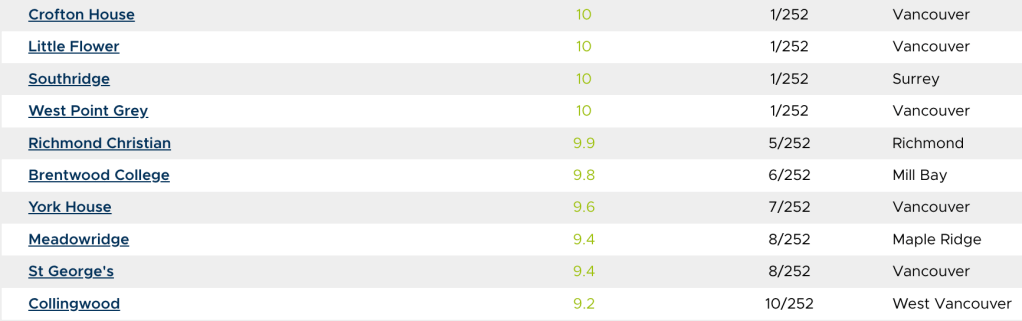
Moreover, out of the top 10 secondary schools in BC, not a single one is a public school. All are private:
And things only get sketchier once you look at what the Fraser Institute constitutes a high-ranking school:

Above is the Fraser Institute’s scoring template for the 2020 annual report of BC secondary schools. Each letter on the sides indicates a different metric, and observing these metrics, we see that to the Fraser Institute, desirable outcomes of a school include-
- (A) high student enrolment
- (B) low “ESL” and “special needs” populations, along with
- (C) high average parent employment income–
-all of which favour private schools because private schools-
- (A) do not have their student enrolment restricted by catchment zones—areas that restrict public school students from transferring to other non-local public schools—
- (B) can screen students to select how many “ESL” and “special needs” students are accepted, and
- (C) require tuition fees to attend, thus deterring middle to lower-class parents from enrolling their kids and lowering the school’s average household income.
Side Tangent
I find it hilarious how the Fraser Institute spells enrolment as “enrollment,” its American spelling, despite the organization being a CANADIAN think tank. Also, when I was in elementary school (which was less than a decade ago), it used to be that students with Asian last names would automatically be put into the “ESL” (English SECOND Language) program regardless of whether or not English was actually their second language. Consequently, the ESL population of your school would directly correlate with how many Asian students you had because to the school board, your race precedes your language proficiency. Later on, there was a shift to call the program ELL (English Language Learning) instead; however, as you can see, the Fraser Institute still calls it ES fucking L in 2020. And yes, they also still call it “special needs.”
Admittedly, the Fraser Institute does also look at (D) the average exam mark, (I) the graduation rate, and other what I like to call “result-based” criteria. And yeah, with this in mind, I admit that Boyd’s 2020 graduation rate was only 93.3%, but it’s nevertheless still ableist, racist, and classist to lower our ranking because 17% of our school was “special needs,” 10% was “ESL,” and the school itself is situated not in the most affluent of neighbourhoods.

Now, regarding exam and graduation performance, there’s a logical, non-tinfoil hat reason for why private schools outperform public schools.
- Firstly, private schools charge tuition fees—tens of thousands of dollars worth of tuition fees—hence, they can afford the best facilities and school supplies that would likely benefit the overall education experience of students.
- Secondly, private schools are able to hand pick students, meaning that they can just pick the students who’re easier to teach.
- Thirdly, parents who choose to enrol their children in private schools likely already care a lot about education and have the funds to afford resources like private tutors.
Consequently, it makes total sense that private schools tend to have more academically inclined students. And so the Fraser Institute’s rankings are valid… except they’re only valid when judging schools by the quality of their students—not the quality of their education.
UBC vs Langara
Here’s a syllogism for ya:
- Better schools have smarter students
- Highschools have smarter students than elementary schools
- Hence, highschool is better than elementary school
In this obviously flawed syllogism, “better” is an extremely loaded word. Am I talking about better in the sense of having better students, providing better learning experiences, or something completely different? Whatever it is, I think we can all agree that the last statement means basically nothing because what’s the point of comparing highschools to elementary schools if they’re teaching two completely different demographics of students? I can have an elementary school filled with the most competent and passionate teachers you’ve ever met on this planet, and more likely than not, their students will still probably get outperformed on the GLA12 by your run-of-the-mill highschoolers just by virtue of the highschool students being older and more fully cognitively developed.
With this in mind, it’s safe to say that when talking about education, a school that’s actually good at educating should not be determined by the hand they’re dealt, but rather how they play their cards—how they TEACH their students. And so, my dear readers of whom I assume are mostly UBC students (at least judging by those who’ve actually talked to me about my past posts), I’d like to say that perhaps Langara (a college in Vancouver) is a better school than UBC, The UNIVERSITY of British Columbia 😦


First off, I’d like to set it straight that I’ve never been a Langara student, so take everything I say with a grain—no, handful—of salt. But anyways, if I took two groups of equally “smart” students, one of 30 and another of 200, and gave them each a single teacher, which group would logically learn better? Probably the group of 30, right? Afterall, the teacher actually has the time to tend to each student and constantly engage with the class. Furthermore, unlike the 200 person lecture that’s basically a glorified $600 YouTube playlist, the class of 30 better humanizes students by actually allowing each individual to be a larger fraction of the greater whole. Apply this thought to Langara’s smaller classes versus UBC’s gargantuan lecture halls and all of a sudden, UBC’s “2nd best school in Canada” looks suspiciously high.

I don’t doubt that UBC professors are more knowledgeable than Langara lecturers, nor do I doubt that UBC has far better equipment and facilities than Langara. But the point I’m trying to make is that a large part of UBC’s success likely derives not from the fact that their professors teach the best, but rather from the reality that they’ve already hand-picked the “smartest” and most academically-inclined students from highschool.
So how much of student success at UBC can actually be attributed to the school itself?
Langara was dealt a high card—UBC was dealt a full house. How can you possibly tell the better poker player just with that information alone? Likewise, how can you tell which highschool is better at teaching when some schools have the privilege of hand-picking wealthier, “smarter,” students?
You can’t.
Chinese Parents and WeChat Moms: Who Believes This BS(?)
Since I was in elementary school, every few months, my mom and other Taiwanese-Chinese moms would meet up at one of their house’s to discuss a variety of topics. How’s everyone’s health? Who just got a divorce? How’re so and so’s investments holding up? And of course, how’re the kids doing? Naturally, while gossiping about us and our academic performances, they’d inevitably bring up the Fraser Institute’s secondary school rankings, or as they call it, just “the rankings.”
“School A is better!”
“No, School B is! They’re ranked a 7.9!”
“I had a friend whose kid went to School C and they said that it’s better than School B, but their AP Chem teacher is worse than the ones in School D and E!”
“But School C has a drug problem! There are kids who do marijuana! I SAID *pant* *pant* MA-RI-JU-A-NA (oh the humanity)! Parent F confirmed it with Parent G whose friend, Parent H, had heard from Parent J!”

The information—or rather viruses—spread amongst these moms are, in case it isn’t obvious, bullshit. But to give my and other “WeChat moms” the benefit of the doubt, it’s not necessarily their fault that they’ve fallen prey to the Fraser Institute and Koch brothers’ propaganda.
As the stereotype goes, Chinese parents are competitive, and this competitive culture in combination with the unfamiliarities of being an immigrant results in Chinese immigrant parents having no choice but to trust the Fraser Institute. In a 2018 research article by Junqian Ma titled “Parenting of Immigrant Chinese Families in Western Countries: A Systematic Review,” Ma found that first generation Chinese immigrant parents tend to be goal-oriented regarding education, measure success by comparing their children’s performance relative to their classmates’, and prefer traditional grading over newer marking systems (i.e. proficiency scale). In countries like China, these values are satisfied by rankings that follow national standardized tests like the Gaokao, which directly dictates which universities students can go to. Thus, unlike Canada, school rankings in China do generally equate to getting into a good post-secondary school. However, while standardized tests dictating university placements are absent in Canada, the Fraser Institute’s rankings are still present, constantly whispering arbitrary numbers into impressionable parents who don’t understand English the best—but do, however, understand numbers and colours. Even while doing research for this blog post, I had to dig everywhere to find information about the Fraser Institute’s biased rankings and billionaire donors, and I can assure you that there’s no way in hell that my mom had ever even considered going through all that hassle herself especially when all the parents around her repeatedly echo the the Fraser Institute rankings as gospel. And so, she marches on, looking at numbers and colours that are validated not by her own research into the think tank itself but rather by her pre-existing paradigms of East Asia.

In Defence of School Rankings
One of the major points that these educational institute think tanks always make is that they’re “democratizing education” by conveniently providing parents with clear information. But let’s take a closer look to see if that’s really the case with the Fraser Institute.
According to Merriam-Webster, a democracy is “a government in which the supreme power is vested in the people and exercised by them directly or indirectly through a system of representation usually involving periodically held free elections.” In the case of the education system, elections equate to parents selecting desirable schools for their children. However, as Dr. Sebastian Weydner-Volkmann, Professor for Ethics of Digital Methods and Technologies at Ruhr University Bochum Germany puts it, the issue of democracy is that it “make[s] the wholly unrealistic assumption that there is a thoroughly informed citizenship, a community of omni-competent [parents]” capable of tracking every school’s every characteristic from the student culture to the semesterly changing teachers. Consequently, parents can only elect schools for their children based not on the intrinsic qualities of a school but on professional perceptions of it, and in the case of the BC Lower Mainland, the only popular professional present is the Fraser Institute. Hence, the Fraser Institute fails to provide democracy because under its monopolistic guidance, parents never actually elect their children’s schools—they only elect the Fraser Institute.

Aside from democracy, it’s also commonly argued that school rankings encourage schools and their educators to do their jobs better because they’d be held accountable by a low-ranking if they don’t. However, considering that the Fraser Institute ranks schools relative to ablelist, racist, and classist metrics, a school like Boyd will literally never earn a high ranking no matter how great its teachers are (and there were definitely some great teachers at Boyd). Moreover, BC schools receive funding based on student population, thus when the Fraser Institute discourages parents from enrolling their children into low-ranked schools like Boyd, the ranking itself becomes a self-fulfilling proficiency as broke schools becomes even broker along with parents who spend upwards of $90,000 annually enrolling their children in what the Koch Brothers have decided to be a “better school.”
The slogan of the Fraser Institute is “if it matters, measure it.” Maybe they’re right. Perhaps student enrolment matters, perhaps the “special needs” population matters, and perhaps parent income also matters.
In the end, however, to truly “make more informed decisions” and overcome the information monopoly of the Fraser Institute is to ask not just what, but also who decides what matters.
Thanks for reading.

Additional Information
This blog post was based on my WRDS150A final paper written on August 12th, 2024, and two of the paragraphs in this blog post were copied and pasted from that paper.

 beebabloggee
Leave a comment