This essay is an April Fools post. I just thought it’d be funny to compare Minions to something so… non-Minion. I don’t seriously believe that Minions somehow prove God’s existence… or do I 🤨
This essay is also YouTube, and I’d highly recommend watching it over reading this blog.
The Book of Genesis—like many other creation stories—is a tale of duality: heaven and earth, Adam and Eve, God and Satan, good… and evil.
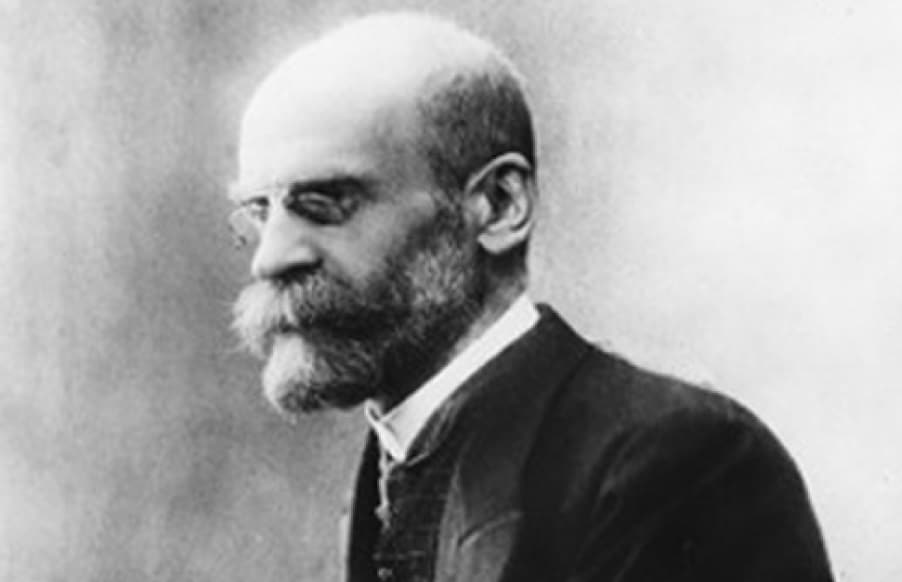
This duality is what French sociologist Emile Durkheim argues is the foundation of religion: the distinction between the sacred and the profane. In his 1912 book, The Elementary Forms of the Religious Life, Durkheim argues that-
“All known religious beliefs, whether simple or complex, present the same common character: they suppose a classification of things, real or ideal, that [one] imagine, in two classes, in two opposite kinds, generally designed by two distinct terms that translate well enough the words profane and sacred.”
One of the most iconic symbols of Durkheim’s argument is perhaps the tree of knowledge of good and evil:
And the LORD God commanded [Adam], saying, “Of every tree of the garden thou mayest freely eat; but of the tree of the knowledge of good and evil, thou shalt not eat of it. For in the day that thou eatest thereof thou shalt surely die.”
(Genesis 2:16-17, King James Bible)
In the Bible, the tree is the first profane object of which its profanity serves not only to distinguish itself from the sacred but likewise for the sacred to distinguish itself from the profane, mutually dependent on one another.
And so it goes on. Just as Eden and the tree beget Adam and Eve, Adam and Eve beget Cain and Abel, beget eventually Jacob and Esau beget again and again and again until we arrive at where we are today: a world that faces—in contrast to the black and whiteness of Genesis—a far greyer duality than just simply good and simply evil.
Who decides what justice and injustice are? Moral and immoral? Right and wrong?
Well, to answer those questions, we can start by looking at the Minions.
Minions and Morality
To the unattuned viewer, the Minions’ goal of trying to serve “the most despicable master they could find” seems to be just a plot gimmick at first.
“GaH ! iT’s JuSt ThE sToRy BrO. iT aIn’T tHaT dEeP,” said some foolish, ignorant viewer who’s too enthralled in the comedy to grasp its divinity, because you see, any attentive onlooker would immediately realize the religious themes of the Minions.
Tell me, could it just be a coincidence that in the Minions’ backstory—or perhaps I should say their Old Testament—they are constantly searching for a “despicable master” almost as some sort of, dare I say, “messiah figure”?!
Tell me, could it just be a coincidence that the Minions were stuck in an ice cave for nearly two centuries almost as, dare I say, Moses was barred from the Promised Land?!
Tell me, could it just be a coincidence that the Minion trio of Bob, Kevin, and Stuart almost always functions as one single unit just as, dare I say, the Holy Trinity?!
Side note: Phallic objects are also a common motif across many religions, and let’s just say…
The Minions are a metaphor for religion, which in and of itself is filled with metaphors that exist—in contrast to “empirical” evidence—only in the abstract realm.
Was Abraham a real person? Idk.
Did Jesus really perform miracles? Idk.
Is God really trying to send us messages via burnt toast? Idk.
More importantly, if no one can empirically prove the existence or nonexistence of God, who’s to say that things like morality even objectively exist?
Matter of fact, if morality doesn’t exist, why am I even trying to be moral?! Heck, Imma go rob a bank right this instant! Be right ba-
Mysterious figure (enters): WAIT!!!
Me: Who- who are you?
Mysterious figure: I’m Immanuel Kant, 18th-century German Philosopher, and I’m here to tell you why morality—and by extension God—exists and is necessary.
Kant Chan
Me (like a cool skater kid): Beat it, buckio! You can’t prove jack!
Immanuel Kant (frustrated): バカやろう… But I understand you, kid. The world is cruel, and assholes win while nice guys always finish last. It’s rather demoralizing…
Me (impatiently): Cut to the chase, pops!
Immanuel Kant (cool as a cucumber): Patience, young one. You see, there is one way for justice to be served in our mortal world, and that’s for an afterlife to exist in which we can reward the moral and punish the immoral. Only with faith in the afterlife, can a just society maintain itself in the face of a demoralizing world. That is why we NEED religion.
Me (nodding agreeably now that I’ve learned from my mistakes and realize just how wrong I was): そうですね… But wait- that only argues for morality’s necessity for religion—not what those morals should be.
Immanuel Kant: (*silence* because he’s actually been dead since 1804)
Me (depressed): Oh… he’s gone, isn’t he.
Kevin the Minion (walks into frame and puts his hand over my shoulder while looking down in mourning. Oh and he’s jacked btw): Shabadee dabadooba banana…
Me: *Sigh* you’re right Kev, let’s go… (sudden burst of energy) Wait, no… Kevin, don’t you see?!
Kevin (confused): Padoo?
Me (eureka moment): You… You are the answer! The Minions… GAH! How did I not realize it sooner!
Kevin (still confused): Despicable me?
Me: Yes! That is what you are! You follow a natural evil that is
Minions on God
At the beginning of this essay, I said that Durkheim’s argument for religion is based on the duality of the sacred and the profane. Likewise, Kant’s argument is based on religion as a necessity for moral stability. Considering that religious views of morality posits morality as that of God’s doctrines—in other words the sacred—that just leaves the question of “who decides what the sacred is?“
Now, while Minions don’t explicitly answer that question, the fact that they naturally follow the most despicable villain means that Minions at the very least prove that there is a natural evil—a naturalprofane—and seeing as Durkheim frames the sacred and the profane as mutually dependent, this means that by proving the naturalprofane, Minions also prove the naturalsacred which proves natural morality which—in combination with Kant’s argument—proves the afterlife which proves the existence of God.
Minions prove God.
More specifically, by following villains such as the Pharaoh and Dracula who are villains from a modern Euro-American perspective, the Minions also prove that the “correct” God is none other than the Abrahamic God. Thus, as long as the Minions stay evil, there is no doubt that God exists.
Except they don’t stay evil.
The Divine Rebellion
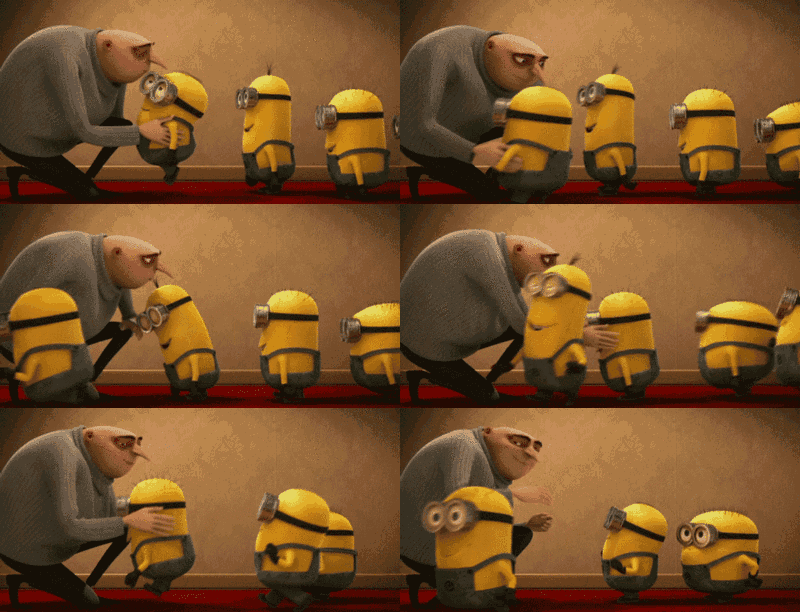
The Minions continue serving Gru after Gru turns good, defying their God-given nature and by extension defying God itself. Given my whole “the Minions’ profanity preserves moral stability” spiel, it’s almost a selfish decision to turn good, and yet the Minions do so anyway because just as evil is in their nature, so too are love and the capacity to change. After all, why be evil when you can become something so much more.
In many ways the dehumanizing purpose of evil projected upon the Minions by God is manifested through the design of the Minions themselves. They’re overly simplistic and scream no originality nor individuality.
From the perspective of the viewer who effectively acts as God, aware of both the worlds in and out of the screen—in and out of heaven and earth—a sea of Minions is just onesea of Minions; however, to their master Gru, he sees a sea of each and every individual Minion: Bob, Kevin, Stuart, and more.
This isn’t an essay to preach about how “God is evil and abandoned us to suffer on earth!” No, this essay is just a reflection on the Minions’ indomitable spirit to not be just what they are supposedto be but what they wantand what they can be.
Be more
Be better
Become.
And with this mantra in mind, the Minions find an eternal peace within Gru’s house where Bob can watch his reflection and see not a despicable me just as Kevin likewise no longer has to see in his reflection… a despicable me 2.








 beebabloggee
Leave a comment