“Due to our ongoing war with mainland China, instructor Bai is asking students to rat out anyone who may be pro-Communist or show signs of treachery. There are big rewards for informants.”
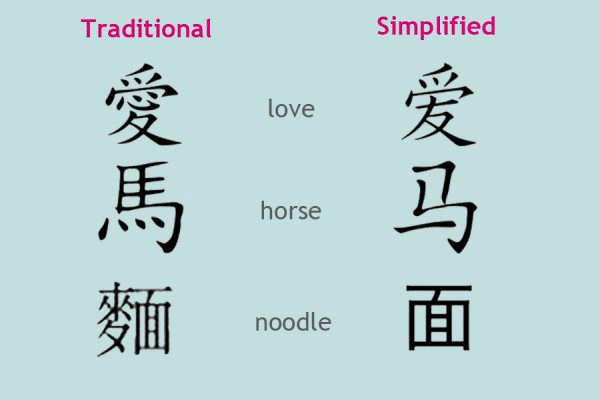
If you’ve ever tried translating Chinese on Google Translate, you’ve probably noticed that there are two Chinese options: simplified and traditional. “Okay, well, I guess I’ll choose traditional because it’s… uhm… traditional, so surely it’s what they use in China,” you think to yourself. Except that’s wrong—China uses simplified. Matter of fact, the only 3 countries places that use traditional as their first written language today are Hong Kong, Macau, and Taiwan, because in 1956, the People’s Republic of China—or better known today as just China—adopted simplified characters as the replacement for the old, harder, traditional system of writing.
Admittedly, simplified is easier to recognize and memorize, yet I’d be lying if I called simplified “easy.” Compared to the 26-letter alphabet of English—the most globalized language in the world—Chinese simplified, although simplified, still has over 8,000 characters total.
The Chinese writing system uses glyphs: unique and independent symbols representing specific ideas and objects unlike phonetics: repeated symbols conglomerated to produce sounds in languages such as English, in which every word is spelt with a combination of 26 letters as opposed to the 50,000 characters of Chinese traditional. And although only around 3,500 of those 50,000 characters are commonly used, that’s still over 10,000% more symbols to memorize than English.
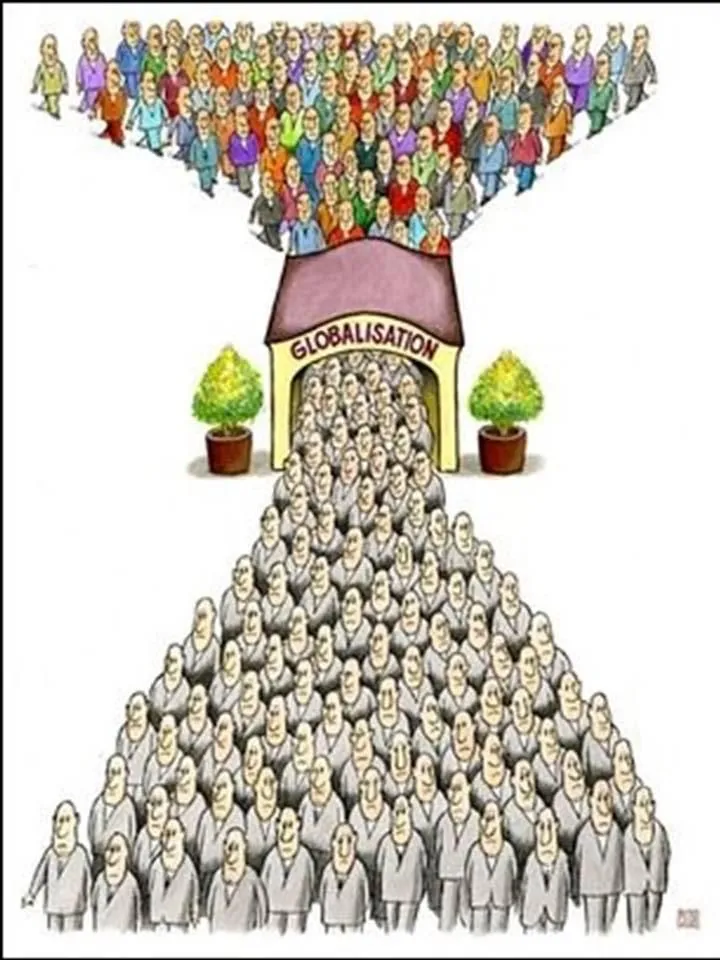
Chinese is hard… like… really hard, and before the 1950s, China’s literacy rate was below 20%. However, after the introduction of the new, improved simplified system, the nation’s literacy rate surged to 85% by 2001. Yes, there were other factors contributing to this increase such as China’s growing wealth and urbanization, but the fact remains that as China began to enter the world stage after World War 2 as an economic superpower globalizing at atomic rates, the nation needed to have a more accessible language. And so Chinese needed to be easier, needed to be more welcoming, needed to be more globalized, needed to sever itself from tradition.
Love Without Heart
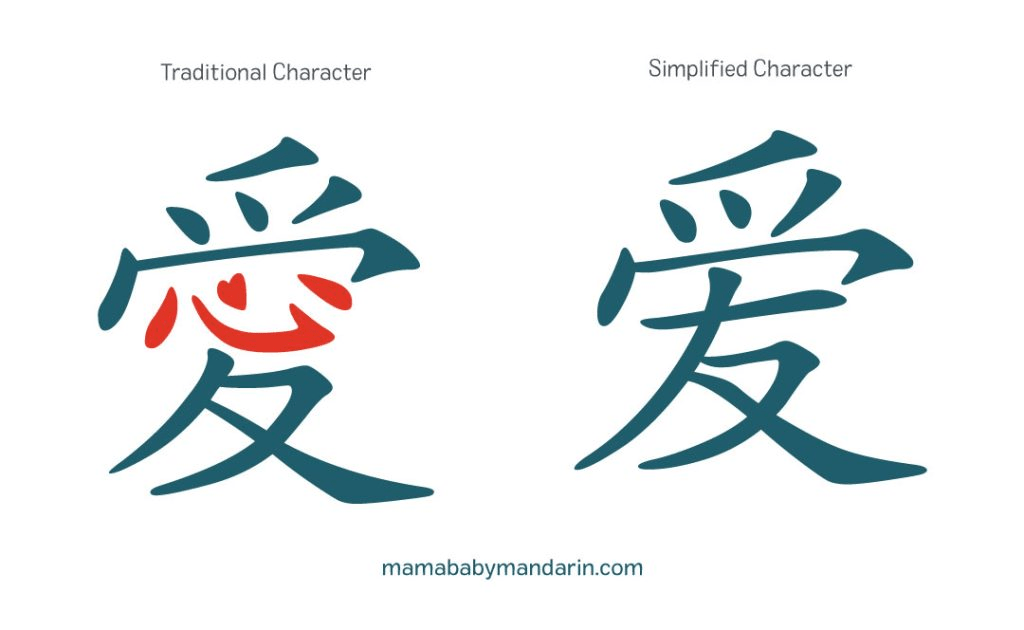
Here is the symbol for “love” in Chinese traditional and simplified:
As I grew up in a Taiwanese household, my parents were adamantly opposed to the simplified system. Using the character for “love” as an example, Chinese traditional is widely considered more artistic and meaningful. “Love” in traditional literally incorporates the character for “heart” in its core; in simplified, however, the heart is removed, and as the popular saying goes: Chinese simplified is “愛沒有心” (“love without heart”): a heartless sell-out that murdered the artistry and cultural significance of the traditional system for no valid reason. Taiwan uses the supposedly harder writing system of Chinese traditional, yet its literacy rate is 96%, so what was the point of sacrificing 6,000 years of history, tradition, and culture so that some White businessman can learn your language a little faster?
We need to preserve tradition! We need to preserve culture! We need to preserve heritage! But can we actually?
China’s won. They’re huge, rich, and powerful and undefeatable and infallible. If they choose to use Chinese simplified, then eventually Chinese simplified will just become… well… Chinese. The heart in love will be forgotten, and soon enough, no one will even remember to miss it.
The issue of languages dying isn’t a unique problem to Chinese traditional. The Irish have been struggling with the preservation of Gaelic for centuries in a similar vein to the Indigenous Peoples of the Pacific Northwest Coast slowly watching their language be dissolved and absorbed by English: the Lingua Franca of the world. I look around at my university and see street signs containing both English and the language of the Indigenous Musqueam people of Vancouver, and I wonder to myself, “who is actually reading this other than some Musqueam people and linguistics professors?” I’m sure that someone behind the scenes does care about the preservation of language, and there definitely are students walking past these signs who do appreciate how they connect to the land’s roots. But at some point, it just feels sad. Last year, as I walk to my Sociology lecture on Monday and Wednesday afternoons, I’d pass by the sign of University Boulevard:
“University Blvd 6200,” it says. Below it, some characters, and below those characters, “place for traditional instruction.” Of course, I can only read the English instructions. The Musqueam language, which pre-colonial times was communicated exclusively through oral means, is unfunctional to me and basically 99% of the school. Beyond the text itself, even what the text is supposed to mean is meaningless. “Place for traditional instruction,” huh? For real? My Sociology lecture had over 200 students in it, took place in a panoptic lecture hall (which is literally the colonial way of teaching by the way), and featured little-to-no emphasis on inquiry—a hallmark of First Peoples Principles of Learning.
I look at the Musqueam text in the street signs, and I see a suffering minority desperately grasping onto what they still have left to call their own as they slowly lose grip.
I look at the Musqueam text in the street signs, and I see tens of thousands of students passing by, unaware of its existence.
I look at the Musqueam text in the street signs, and I see a reflection of Chinese traditional—my own language—dying. All efforts to preserve it: futile. All attempts to preserve it: potentially harmful.
Get Beyond Babel
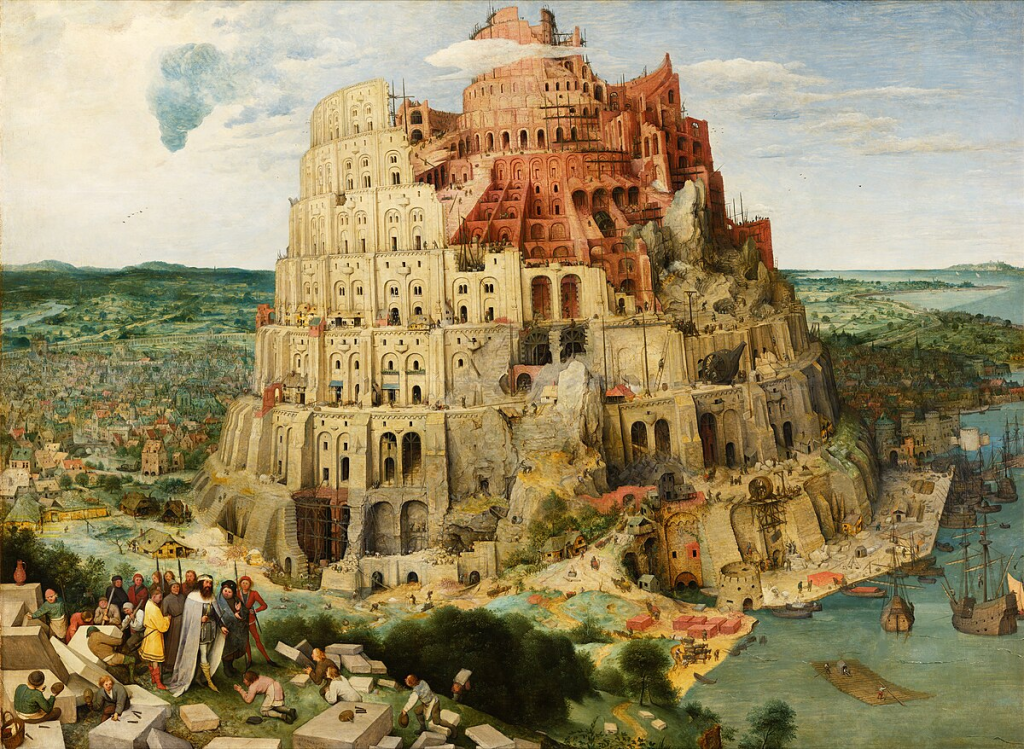
In Genesis 11, the Bible presents the story, The Tower of Babel. In it, the Babylonians had attempted to build a tower to heaven, and as a result of trying to play God, God smites the people atop the tower and they began speaking different languages. According to Christianity, Babel is the origin of language diversity.
In 2001, Nigerian journalist Ken Wiwa published his essay “Get Beyond Babel” which discusses how his own Indigenous language of the Ogoni had been dying not just because of global and political factors, but because his community had “ossifie[d] into a parochialism trapped in a cycle of self-repeating prophecies that refuse to embrace or even acknowledge the passage of time.” Look at French! What used to be the international language of the world is now a shadow of English due to French’s “fastidious custody” that focused more on accuracy rather than adaptability. French insists on making new words whereas English absorbs. The Chinese word 炒麵 (chǎomiàn) directly translates into English as chow mein. Likewise, Japanese takes the same phonetic approach, dedicating an entire alphabet to foreign words. Television is テレビ (terebi) and McDonald’s is マクドナルド (makudonarudo). It’s through this willingness to adapt, has English garnered its Lingua Franca status containing what is now over 500,000 words as opposed to the older yet now smaller French’s 100,000. If you read Shakespeare today, it feels like you’re reading in a whole other language because even in less than five centuries, English has already evolved into something entirely new, because unlike French, English was willing to suck up its pride and adapt.
Note: “Romaji” is what the Japanese word would sound like in English
Wiwa attests that to truly preserve a language through time, one simple truth must be acknowledged: “Indigenous peoples must not turn inward and cling to nostalgia for sustenance. Though we look back, we must always go forward.” There is no Ogoni word for “computer,” and the word for airplane is “faa-bu-yon,” meaning car of the sky. Chinese is similar in its hesitancy towards assimilating foreign words. A train is a “fire car” and a computer is an “electronic mind.” Both Ogoni and Chinese make attempts to twist and bend what they already have to survive in the modern age, but compared to the all-devouring phonetics of English, even Chinese simplified is not simple enough. English globalization conquers Chinese history. English phonetics assimilate Chinese glyphs. English devours Chinese. Thus, Chinese needs to submit.
But I don’t want this to be the case.
For a language to be assimilated is for a language to be murdered. Some people say Latin isn’t dead and that it’s just evolved into other languages, but it’s still just a shadow of what it once was. Words like “et cetera” and “alibi” are preserved and commonly used in English, but this isn’t Latin. They’re Latin words—and that’s it. These words have become flanderized versions of themselves, carrying husks of their original meanings. Latin has evolved, and now people use its words regularly through popular languages such as English and Spanish, but the original, the authentic Latin of the Middle Ages is gone now—dead—just like the Elizabethan English that Shakespeare used… 0_0
Bruh just say you like him
Oops! I’ve accidentally proved Wiwa’s point that language is fluid. A common argument I hear defending the preservation of language is that meaning from a certain language can’t directly translate to another. The English word “love” is just the English definition of “love,” what English specifically—or should I say unspecifically—defines “love” to be. In Greek, however, there are eight different words for love—erotic love, philia love, agape love, the lost goes on—far more nuanced than English’s one word for love will ever be. But by literally stealing the words erotic, philia, and agape, English has effectively conserved the Greek meaning of love, and in that sense, preserved an element of Greek culture.
Throughout this article, I’ve used predatory diction to describe English. “It devours! It assimilates! It conquers!” But in the process of devouring and assimilating and conquering, English is preserving, and beyond just preserving, English is thriving as the global Lingua Franca. Humans need a mean of communication to understand each other and work towards a common goal. Countries such as India have over 100 major languages, and that rich cultural diversity is cool but ineffective at uniting a country—ineffective at getting beyond Babel. To get beyond Babel means to simultaneously preserve identity and connect people and ideas through shared language. To submit to God’s punishment would be to continue clutching onto dead languages that divide more than unite. To truly defeat God would be to look up again at the heavens and laugh at him, “we will never be divided!”
I’ve done all this research for this article. I’ve made all these connections to prove why languages need to adapt to survive—to prove why Chinese had to simplify. And yet, I don’t want Chinese traditional to change. I, who can’t even read and write Chinese, who grew up in Canada, who is writing an article on the importance of language adaptation, still want Chinese traditional to continue thriving for no reason other than I like it. It’s part of my identity and heritage. I know this is a pathetic reason, but this pathetic reason is also why we preserve any language, really. The world can technically continue with just one language while every other language gets stored into some online database, so if we ever forget what love with heart looks like, we could just look that up on some Wikipedia page—but there’s no point to language if it’s not being used. A language doesn’t die when all written records of it disappear. No. Languages are far more volatile. Languages die when people stop using it because the purpose of language is to serve its people and integrate into the very identity of communities and individuals. I want to preserve Chinese traditional because I want to preserve myself. To ask the question of “is language worth preserving” is to ask the question of “is my heritage worth preserving,” which is to ask the question of “am I worth preserving?” And the answer is no, of course I’m not worth preserving. Neither my life nor death would really account for much of anything meaningful. But then again, why is anything worth preserving? What’s the point of the universe? What’s the point of life? What’s the point of the Lingua Franca? What’s the point of uniting the world? What’s the point of getting beyond Babel? All of these questions lack an objective answer, and as such, my pathetic defence as to why I want to preserve Chinese traditional becomes progressively more valid. I don’t know what the point of the universe is. I don’t know what the point of my life is. But what I do know is that it hurts me to watch the language my family’s been using for the past few millenniums slowly die off. I do know that I can objectify my feelings, and if my feelings are telling me that I want to preserve Chinese traditional, what better reason can there possibly be to preserve anything?
American Born Chinese
Steveston, Richmond
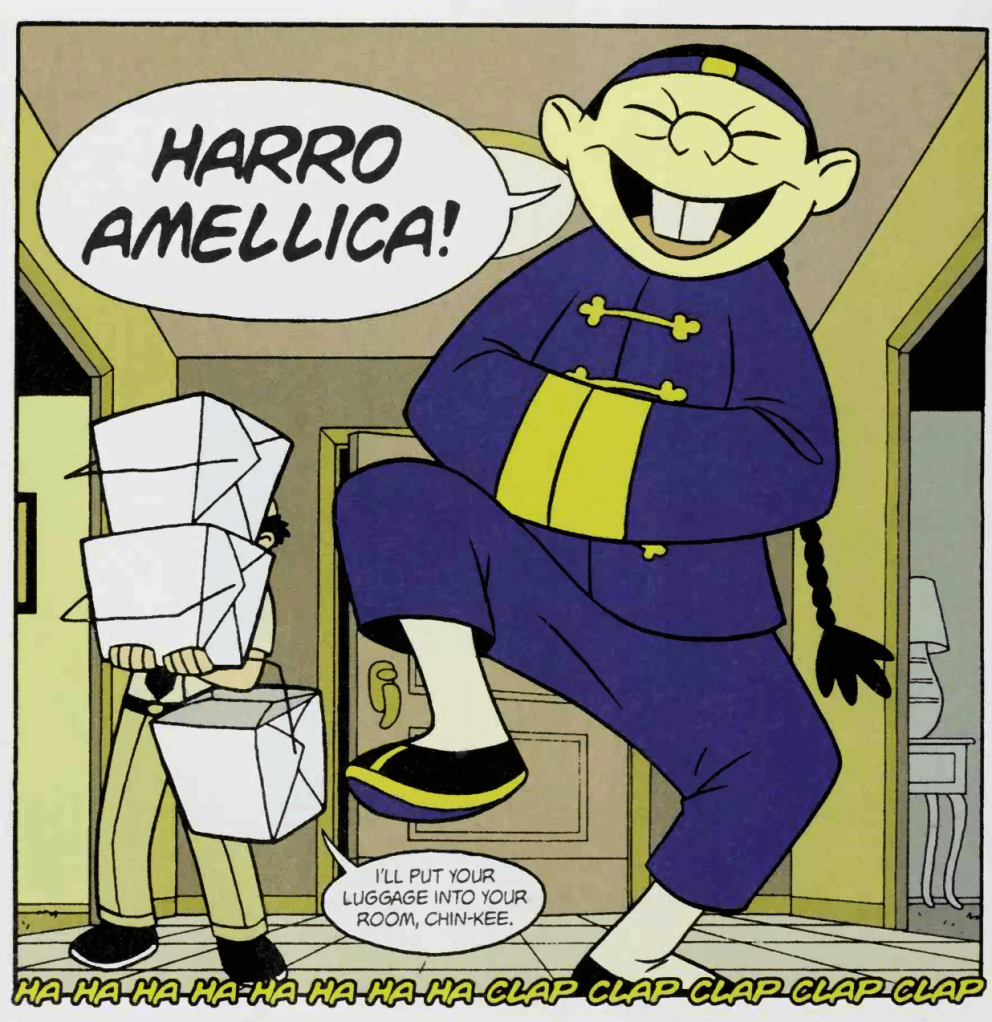
This is Richmond, British Columbia. It’s the city I grew up and am still living in. It’s also the most Asian city in North America, with the Chinese population making up more than 50% of the city. Now, growing up Asian in a predominantly Asian community kinda takes away from the whole alienated FOB experience. I wasn’t bullied for being Asian, nor did anyone ask me if I eat dogs or if my dick’s one-inch long. I experienced micro-aggressions here and there, but all of those were purely the results of my aggressor’s ignorance, not malice. It’s comfortable to be Asian in Richmond. It’s normal to be Asian in Richmond. However, when I look at media depictions of Canadians and Asians, neither capture who I am. I don’t wear a toque and a plaid vest everywhere I go while chanting “aboot! Aboot!” nor do I practice kung-fu every morning while saying “harro” to my neighbors. I also don’t know how to read and write Chinese, I feel uncomfortable around a lot of Asian foods, I don’t understand Taiwanese at all, I don’t know when the Lunar festival is, why I’m supposed to celebrate it, and what the hell is the point of eating mooncakes. In the process of fitting into western culture, I’ve forsaken my Asian heritage. My name is Eddie and Eddie is Canadian but ethnically East Asian. Eddie wants to fit into Canadian society. Eddie wants to preserve his Asian heritage. But those two interests conflict. I conflict.
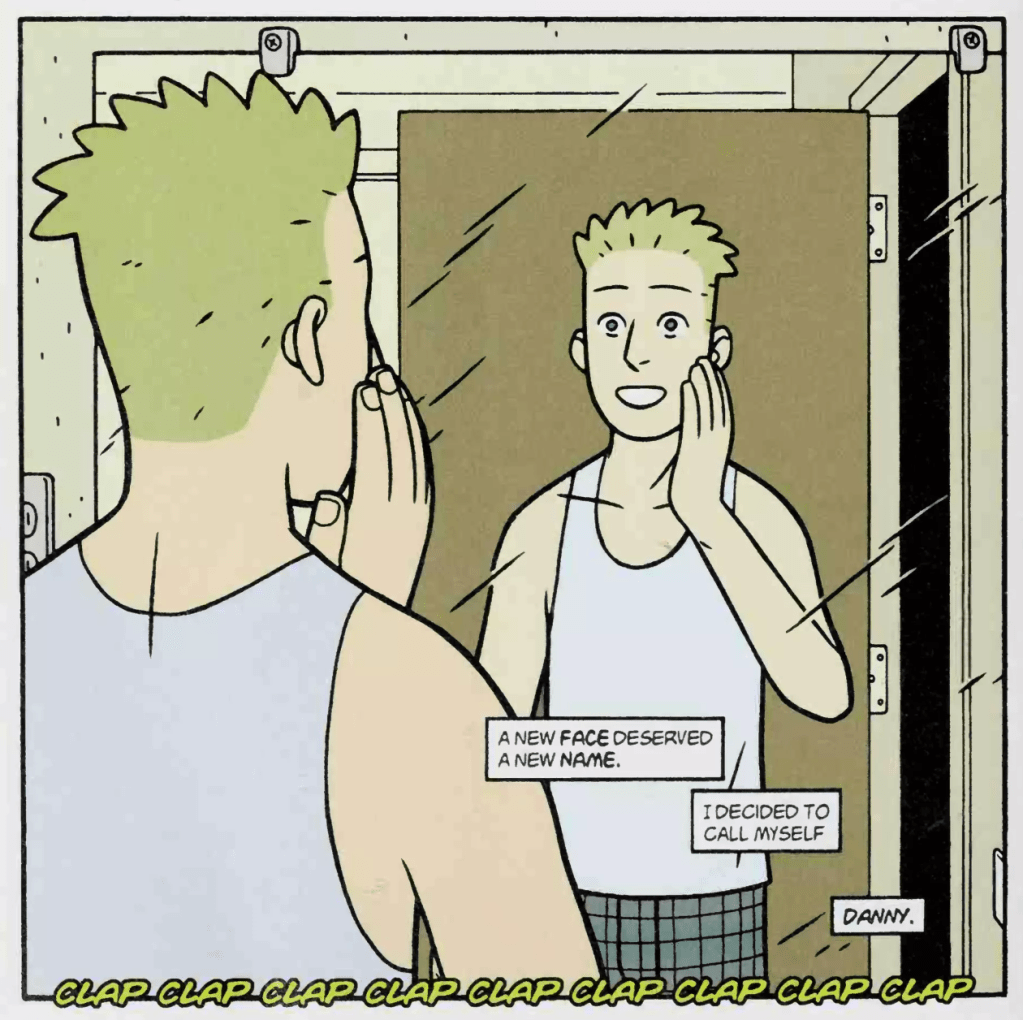
In Gene Luen Yang’s 2006 graphic novel, American Born Chinese, this struggle of betraying one’s own identity is brought into the limelight. Jin, the Chinese protagonist living in suburban California, attends a white school and is subsequently treated like shit. No one wants to be friends with him, he goes through your stereotypical racist bullying-victim experience, and his ignorant teachers whose jobs are to help him fit in don’t understand him.
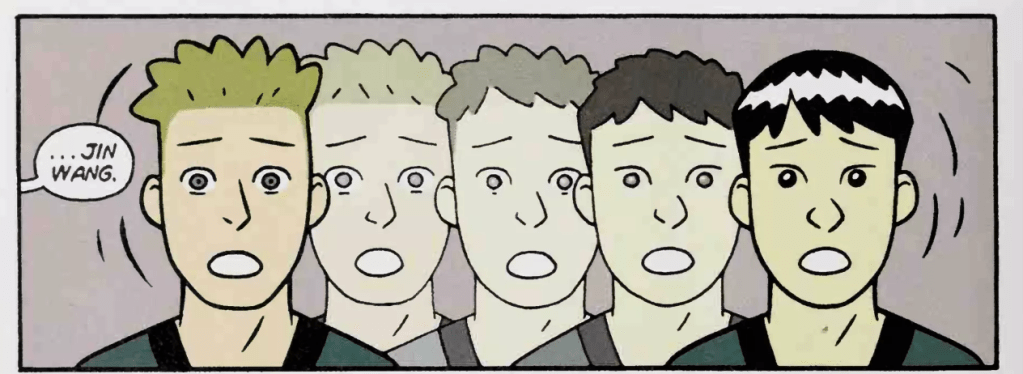
In every instance of racist micro-aggressions against Jin, the catalyst to this disrespect is never anything Jin does, but rather the ignorance of his classmates. There isn’t a problem with eating dumplings, but in the eyes of the white classmates, eating dumplings means eating dogs. Despite Jin’s innocence, however, he ends up blaming this feeling of displacement onto his Asian identity. When split up with his White crush, he believes that “it was because I didn’t have a perm,” when in reality, it was cuz he’s just kind of a loser—a self-loathing loser who, above all else, wants to be White like his peers: to live the normal life: the happy life. And he achieves this goal.
Jin wakes up one morning with blonde hair, blue eyes, pale skin, and an athletic body. He’s no longer asian—no longer flawed—but he still isn’t happy. Jin is visited by his supposed cousin, Chin-Kee, the living embodiment of Chinese stereotypes. This Fu Manchu-looking guy goes around saying all “Harro Amellica,” breath smells like shit, does disgusting shit, eats gross shit, pulls nasty ass pranks like a little shit, cockblocks Jin like an annoying shit, does kung-fu and shit.
Chin-Kee is everything Jin thrives to not be, with the one exception being that Chin-Kee is happy with himself. Chin-Kee struggles with no racial dysphoria and is completely content with himself. In a white blizzard of ignorant racism, Chin-Kee finds the invincible summer within himself—not others—a feat that Jin never successfully achieves or even attempts to in the first place. I’m not condoning Chin-Kee’s disrespectful actions or anything—he is, after all, a little piece of shit—but, ignoring all the nuances of culture, all Jin sees in Chin-Kee are the negative aspects. In the eyes of Jin, Chin-Kee’s smelly breath, inappropriate pranks, and sexual harassment have become traits not just belonging to Chin-Kee, but all of Chinese identity. No longer is Fu Manchu Asian, because Asian is Fu Manchu, and with this hasty generalization in mind, Jin commits identity genocide under the black and white fallacy that he’s either a normal Whiteboy or Chin-Kee.
In the end of American Born Chinese, Jin comes to terms with the reality that he’s Asian, and his struggles as an American Born Chinese isn’t that he’s born Chinese, but that he’s unable to figure out who he is: American or Chinese, an either/or instead of both, and it’s only in overcoming this fallacy and accepting that he is American and Chinese, does Jin finally achieve the self-actualizing happiness he’s been seeking all this time. Even if being Asian is impractical and in the way of American society, Jin is and always will be Chinese: an ethnicity that with or without emotional attachment, would still entail betrayal if abandoned.
Now, there are a lot of aspects of Asian culture that I adamantly disagree with. I think Asian education and work culture is inhumane, hygiene is sketchy at times, Traditional Chinese Medicine is just a field of everyone subconsciously agreeing to gaslight each other into thinking that eating tiger penis will make you last longer, and the whole collectivist mentality creates an abysmal lack of critical thinking and self-expression. But I still see Asian people as my people and myself. I’d like to think that I’m trying my best to understand where these flaws are coming from: a two-millenium history of standardized testing has resulted in a stressful education environment; countless wars, famines, and genocides have sent hygiene down to the bottom of many people’s survival priority lists; a revolutionary movement rejecting western ideology incidentally rejected western science; and the diverse fauna of different geographies in tandem with poverty, lack of education, and unscientific paradigms regarding nutrition resulted in Covid-19.
It’s not betrayal to try to understand my own culture’s flaws. If anything, recognizing the flaws of a culture is healthy. Ken Wiwa criticizes Ogoni preservation attempts in his attempt to preserve his people’s language. Besides, no culture is perfect, and to think that one culture is more sublime and better than all others is uh…
Culture, like language, and language, like culture, is fluid and adaptive. Without one objective superculture to rule them all, the question of “why should we preserve culture” will forever be rendered an answerless stalemate, and in this answerless stalemate, the only answer is, again and pathetically, “I want to preserve my culture because I like it.” So let’s own who we are and accept that culture is identity, inescapable and imperfect and thus our onus to understand and reform so that we can be even prouder of who we are and that “who we are” is slowly ever-changing for better or for worse. Chinese culture now is far different than Chinese culture from 2,000 years ago, yet it would be absolutely wrong to call one more Chinese than the other. As Ken Wiwa says in the last line of “Get Beyond Babel,” “languages and cultures don’t die—they just get absorbed into something else.”
But to be absorbed is only the good ending.
Detention and Reconciliation
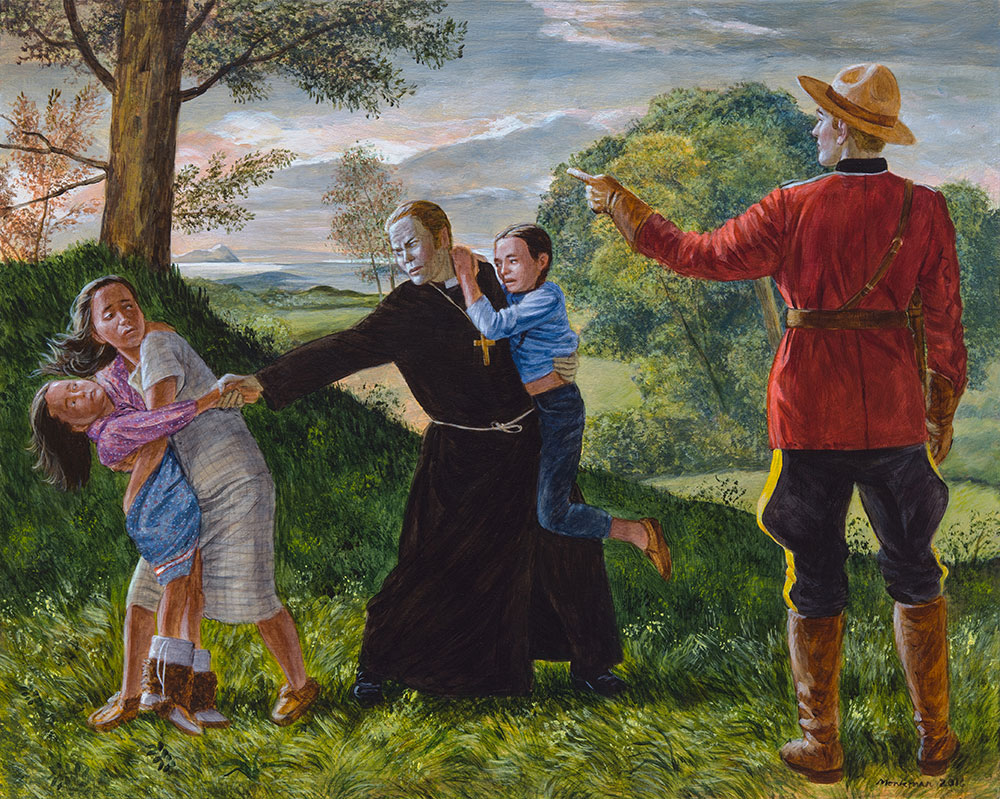
So far in this article, I’ve primarily discussed the adaptation of language from an individual and preservationist perspective. Jin is in a White environment and struggles between the choice of preservation or assimilation in a similar way as Wiwa proposes the dilemma of whether or not the Ogoni should be trying to preserve every facet of their language. In both cases, independent choice is present: Jin chooses to assimilate, and the Ogoni choose to preserve their language. But to have a choice is not a universal reality, and oftentimes, assimilation is not an option, but a dictation. Through institutional means, languages, cultures, and heritages have been wiped out in varying forms of cultural genocide. Canadian residential schools have severed children from their family, language, and ancestry. Likewise, Irish public schools set up by the British presented themselves as a generous medium for free education, when in reality, indoctrination would’ve been a more accurate word.
My mom speaks Taiwanese Hokkien, Taiwan’s original language before Chinese Mandarin took over. Funny enough, her dad had to learn Japanese at school because of colonization. Skip 30-years later, and my mom meets the same fate—now just with Mandarin being the new oppressor. I was never taught Hokkien—my mom had to reason to teach me a dying if not already dead language. That aspect of my and my mother’s family heritage is gone. Occasionally, I’d slide in a few Hokkein words I hear from my mom, but I don’t know the language—I don’t know what it’s supposed to mean to me. Is this what getting beyond Babel is? Sliding in a few words here and there? Jargon evolving in years? Vocabulary in decades? Grammar in centuries? Hokkien has barely been absorbed. It’s dead. The few words I and other Taiwanese kids know today are nothing but a corpse. Languages do die.
HISTORY BREAK!
I need to explain the history of Taiwan for this section to make sense. Skip this next paragraph if you already know about the White Terror and whatnot
In World War 2, China had two major political leaders: Mao Zedong and Chiang-Kai Shek. Chiang’s party, the Kuomintang, was leading the political power race WAY ahead of Mao’s communist party, but unfortunately for Chiang, he kinda sucked at a lot of things such as not losing to the Japanese Imperialists, not publicly running away from war, not forgetting to support the peasants that made up 90% of China, and not intentionally killing half a million Chinese civilians by flooding the Yellow River as a war strategy. But I digress. As the result of his questionable leadership, Chiang and the rest of the Kuomintang, approximately two-million people, were kicked out of China and retreated to the tiny island of Taiwan in 1949, where they then declared themselves the real China, hence why today we now have the People’s Republic of China and Republic of China, AKA Taiwan. Needless to say, Chiang moving in two-million foreigners kinda pissed off the original Taiwanese locals, otherwise known as 本省人 (“benshengren”)—translating to “natives of the province”—who weren’t too happy about getting colonized again considering that they only just got the Japanese to finally fuck off. Anyways, “martial Law!” declared Chiang, and so begins the White Terror: 40-years of civil unrest mixed with murder, betrayal, indoctrination, rape, torture, and cultural genocide. My great-grandpa used to be a prominent member of the Kuomintang. One day during the White Terror, he was randomly called to work. He never came back.
It’s ironic, really. If you ever want to see the greatest collection of ancient Chinese artifacts in the world, you’d go to the National Palace Museum in Taiwan—not Mainland China—because when Chiang came, he wanted to preserve Chinese culture, and yet when he arrived in Taiwan, he ultimately uprooted another culture instead.
My dad’s side of the family came with the Kuomintang—my mom, colonized by them. What does that make me?
Released in 2017 by Taiwanese video game development studio, Red Candle Games, Detention explores the civil unrest of the White Terror through the retrospective of Ray, a dead high school student Ray who undergoes a trance-like journey in the afterlife as she tries to escape purgatory: her school. While traversing through dead hallways filled with zombie-like figures called the lingered, Ray relives memories of her past life: happy memories with her parents; the secret book club her teacher Yin started to preserve knowledge in a time in which information was policed and forbidden; her parents’ eventual fallout and her father’s infidelity; finding solace in talking to her counselor, Chang; finding romance with Chang; Yin splitting up Chang and her; reporting the secret book club to a Kuomintang officer; having all her friends imprisoned for decades; having Chang be executed; being awarded as a hero for selling out his friends; suicide.
Seemingly as punishment for betraying her own people, Ray is stuck in purgatory, unable to live nor die. But from an absolutely pragmatic perspective, Ray’s decision made sense. In the book club, she risked getting reported, and it was run by the woman who stole her lover anyways. Moreover, the club was probably gonna get exposed eventually, and when that day came, Ray would inevitably go down with the club. To at least preserve something, Ray had to snitch. But this logical method of thinking strips away humanity from the equation. The book club is still Ray’s club filled with her friends and peers all thriving to preserve their knowledge and identity in the face of a draconian government. They all suffer and cry together and all understand the tyranny of the White Terror. Consequently, Ray’s betrayal of the club was not just a betrayal of her own people, but her own sense of solidarity.
To answer the question of “why should I preserve my identity?” Detention responds with the question, “how can I ever live with betraying my identity?”
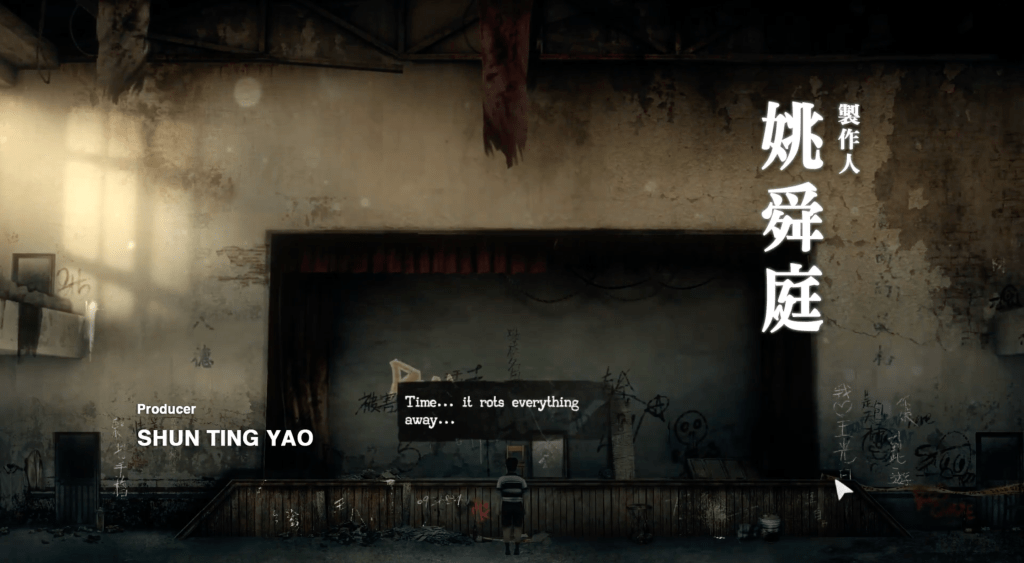
In the last act of the game, if the player answers all of Ray’s questions correctly, they’d be rewarded with the secret ending. After the end of the White Terror, one of the members of the book club, Wei, is finally released from prison as an adult after being deemed innocent, but there is no ceremonial justice. He’s lost 15-years of his life, his mother is dead now, he walks the hallways of his old, now abandoned, high school alone as an old, limping man. The typhoon in the beginning of the game is gone now, and the sun is out, rendering the old school more vibrant than it had ever been shown. But everything is rotten—abandoned—the beautiful scenery, serene music, birds chirping, and flora blooming can’t cover up the evergrowing graffiti and decay. No beauty can fix what’s lost.
In the final scene of this ending, however, Wei sits down on his old seat and Ray appears in front of him. Do they reconcile? Will he forgive her? Is she now vindicated of sin?
The screen goes black and the credits roll.
The ending of Detention is ambiguous, forcing the player to create their own interpretation of Ray’s reconciliation—or failed reconciliation. I’d like to think that Wei does forgive Ray in the end. He’s a broken man who’s literally lost everything and has nothing to turn back to. Just as how there’s no divine justice to his release, there is also no divine purpose to his continued anger. With nothing left in the world and no purpose left in his life, the only choice left for Wei is to forgive Ray and move on. In contrast to Ray’s suicide ending, the community consensus regarding Wei’s ending is that it’s the “Good Ending.” But regardless of whether or not you believe Wei and Ray reconcile, the blunt truth remains that Wei doesn’t have his youth anymore, and what he’s lost is forever irreplaceable.
By definition, reconciliation is the act of restoring a good relationship, and that’s the ugly in Detention’s “Good Ending.” When Wei and Ray reconcile, it’s Wei and Ray’s relationship that’s fixed—not Wei’s life. With a big, forgiving heart, Wei will continue living with no youth, no classmates, no community, no book club, and no mother. As necessary as reconciliation is, there will always be the ugly truth that something irreplaceable has been erased. And no amount of reconciliation will ever fix that.
Richmond: Why Should I Preserve My Asian Heritage?
Here in Richmond, there are three prominent malls all sharing the same street, yet also all differing in personality. There’s Richmond Centre, the most popular one that every highschooler goes to if they’ve got nothing else to do. There’s Lansdowne Mall, the one primarily targeted at two demographics: old Asian parents and Best Buy shoppers (there’s only one Best Buy in Richmond). Last but not least, there’s Aberdeen Centre, the one for barbecue and young Asian hypebeasts.
Richmond CentreLansdowneAberdeen
I’m gonna be totally transparent here: I really didn’t know what to write for this outro because it feels like I’ve already said everything I wanted to say, namely that languages should be preserved as long as there are communities that like it. This article could’ve ended when I talked about Babel, but I figured that discussing American Born Chinese and Detention was necessary to justify why liking something—no matter how pathetic that something is—still matters. Being robbed of culture sucks and so does lacking a sense of belonging. No perfect culture exists, and every culture has goods and bads, the pretties and the uglies (this article has also turned out to be 5,000 words, so if you somehow made it this far, 💞I love you💞).
Richmond Centre has so many designer shops that seemingly represents the worst of consumerist culture. Lansdowne is kinda a disgusting place and I don’t really trust the nasty bathrooms. Aberdeen has this one area that’s basically been incomplete and abandoned since 2013. But still, all three places have their own audience.
Next to Richmond Centre is a place called the Richmond Public Market, and if you thought Lansdowne and Aberdeen were Asian, then you’d probably think that the Public Market is Asia.
Richmond Public Market
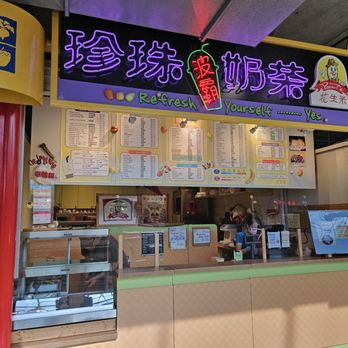
Basically everyone here speaks Chinese, the tables are sticky, urinals are flooded, parking lot is crowded, there’s someone downstairs selling sketchy iPhones—and there’s a bubble tea shop here that my friends and I frequent because their prices are far more reasonable than most places—cash only though. That’s kinda annoying. But still, I take a sip-
Full of interesting insights about Asian cultures! I could definitely feel ur deep love in ur culture n ur family 🙂 As an Asian growing up in Asia for most of my life the identity concerns were pretty new to me, but was able to imagine how it feels like n I do believe it’s one of the important topics to discuss as the world is getting more connected, multicultural, and borderless. I feel like this is a healthy, constructive, and mindful way of self-understanding and actualization – getting to know urself and each of ur molecular components. I’ll be rooting for ur journey! Keep it up 🙂
It’s nice to know that there’s other people who feel the same way as me and is able to delve even further. It helps me undersrand a lot about my own struggles too!! This was a great read and I practically clung onto every word. The passion was evident and the delicate balance of humour and goofiness shone through.
I too also go to the same bubble tea (not boba) shop for the longest time!!! Hoping they stay open for years to come 🙏🙏
The simplified vs traditional argument is interesting. Ease of learning vs what people are used to and expression. As a learner of mandarin Chinese simplified appeals much more but in practice I’ve found that you need both as 漫画 often is written in traditional, and random people will prefer to use it in their onscreen subtitles or wechat posts etc.
I’ve found that in many cases I can use the simplified that I know to work out traditional, but Chinese people seem to be able to read both instantly despite the massive differences in some cases.
I’m not sure if the English language itself is responsible for it’s popularity over the fact that Britain conquered as much as it possibly could. I didn’t mind the lack of any real similarity between English in Mandarin and words like 电脑,钱包 were far more easier to learn. I was very confused when I came across 古德梦宁 for example, even though for an English speaker this phrase is surely supposed to be easier!
I feel I agree with the general sentiment. I don’t mind about Latin going away because there is no longer a community that speaks it, but the people who are still around speaking these languages are really important.


















 beebabloggee
Leave a reply to :P Cancel reply